
UAV Hardware Parts: Light Weight Without Losing Stiffness
Take 200 grams out of a multirotor frame and you gain flight time. Take the same 200 grams out of the wrong place and you gain a frame that twists under yaw command, a camera gimbal that never settles, and a flight controller fighting an oscillation it cannot tune out. UAV hardware parts sit between those two outcomes, and the difference is usually geometry and joint design rather than exotic material.
The weight budget nobody writes down
Most airframe teams track battery, motors, payload and avionics. Fewer track hardware: screws, standoffs, arm clamps, landing gear brackets, antenna mounts, gimbal plates. On a 2 kg quadcopter, fasteners and small brackets can easily reach 80 to 120 grams, which is 4 to 6 percent of all-up weight and comparable to a modest battery upgrade. Replacing steel M3 screws with titanium or aluminum equivalents, and consolidating five brackets into two machined parts, often recovers more flight time than a motor change, at a fraction of the engineering effort.
Stiffness per gram beats strength
Drone structures rarely fail by yielding. They deflect, and the deflection feeds back into control. A center plate that flexes 0.5 mm under motor thrust changes the effective angle of two rotors relative to the frame, and the flight controller compensates for a mechanical error it can never fully learn. This is why a well-designed 7075 arm outperforms a heavier mild steel one. Specific stiffness, elastic modulus divided by density, is roughly 26 for aluminum, 25 for steel and 25 for titanium, so no metal wins outright. The real gains come from section design: a closed box section, a gusseted corner, or a truss pattern removes material from the neutral axis and puts it where bending stress lives.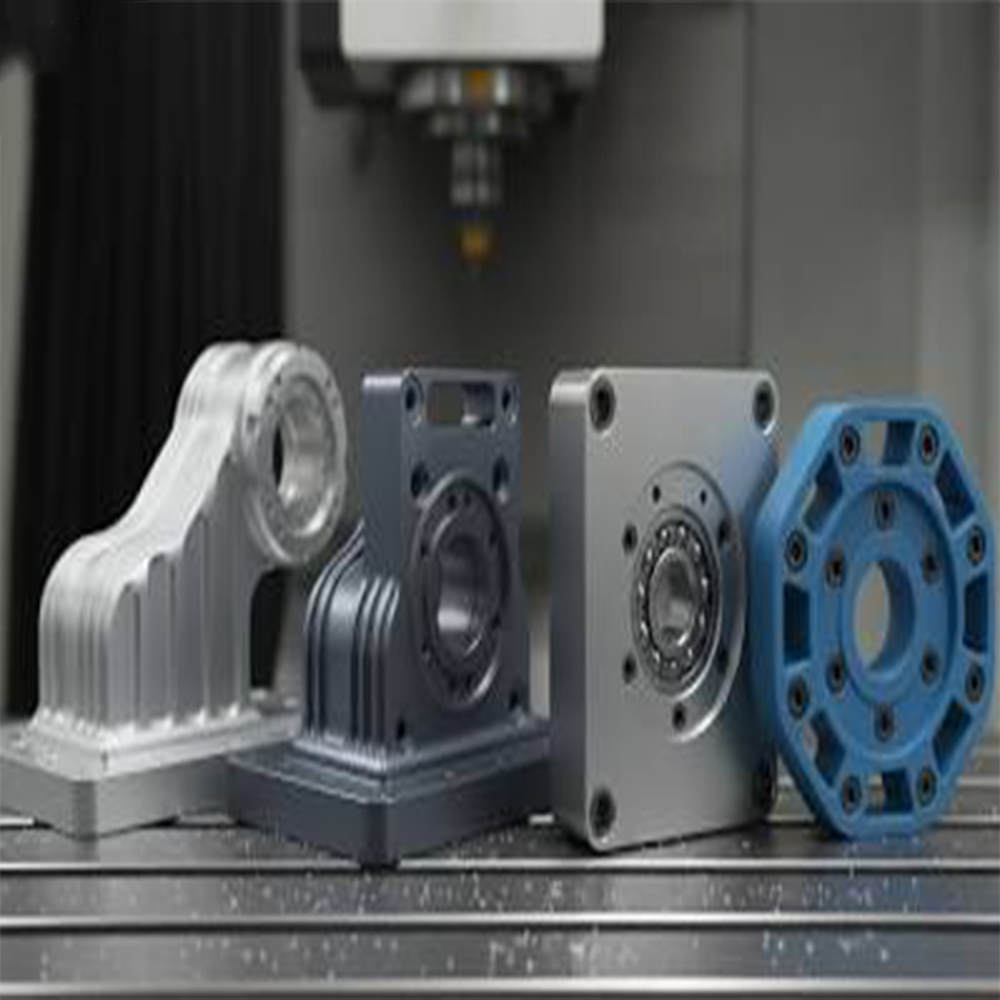
Materials in practice
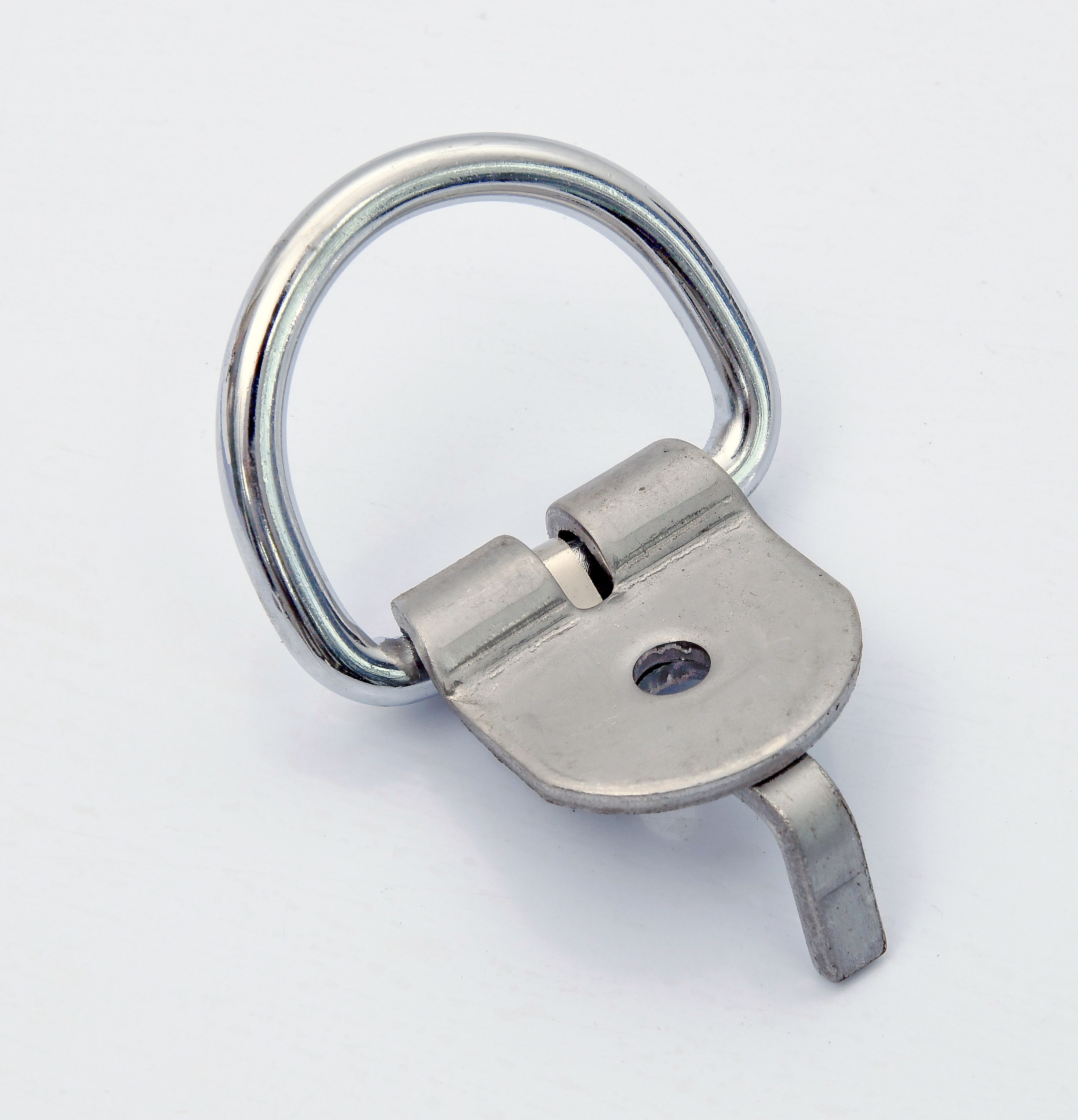
6061-T6 handles center plates, landing gear and general brackets. 7075-T6 is the choice for arms, motor mounts and folding hinges where yield strength and fatigue life matter. Magnesium alloys save another 30 percent over aluminum but demand corrosion protection and careful fastener isolation, and they are unforgiving of thread stripping. Carbon fiber plates need metal inserts at every bolted joint, because a bolt torqued directly into laminate crushes the plies and loosens within a few flight hours. Titanium 6Al-4V is worth its cost on hinge pins and high-load clevis fittings, where a small volume of material does a large structural job.
Vibration, the quiet killer
Propeller and motor vibration arrives at the frame as a continuous spectrum, with a strong peak at blade-pass frequency. Threaded joints under that load loosen by ratcheting: relative motion wears the thread flanks until preload disappears. Three defences work. Use threadlocker rated for the temperature the joint sees, not the general-purpose grade. Use serrated flange nuts or wedge-locking washers on joints that must be reopened. And design the joint so the bolt is loaded in tension rather than shear, with a shoulder or dowel taking lateral load. On gimbal and antenna mounts, a thin elastomer pad between metal surfaces does more for image stability than any amount of machining precision.
Tolerances that actually show up in flight
Motor mount flatness matters more than most drawings admit. A mount face that is 0.1 mm out of flat tilts the motor, and the resulting thrust vector misalignment produces a slow, uncorrectable drift. Hold 0.02 mm flatness and 0.05 mm position on the motor bolt circle. Propeller adapter bores should be within 0.01 mm of nominal so the propeller seats concentrically; runout here is a direct source of vibration. Folding arm hinges need a controlled clearance, typically 0.05 to 0.1 mm, tight enough to avoid slop and loose enough that grit does not lock the mechanism.
Weather, dust and salt air
Type II anodizing at 10 to 15 micrometres is the baseline for aluminum airframe parts. Coastal and maritime operations justify a sealed anodize or a chromate conversion coating plus a topcoat, because bare aluminum pits quickly in chloride environments. Stainless fasteners in aluminum plates create a galvanic couple, so specify a barrier such as a plated finish or an isolating washer. Where a drone must survive rain, the weak points are rarely the machined parts and almost always the joints between them, which means gaskets, O-rings and a documented ingress protection test rather than a marketing claim.
What to check in a drone hardware supplier
Ask for the flatness inspection method, not just the number. Ask how the factory controls burrs on thin plates, since a burr under a motor mount is the same as a bad face. Ask whether they can anodize before or after tapping threads, and whether they mask bores. And ask for a sample lot at production tolerance, because a supplier who can hit 0.02 mm on one part and 0.06 mm across a batch of fifty is a different supplier than the one on the quotation.
References
Fahlstrom, P. G. and Gleason, T. J., Introduction to UAV Systems, 4th edition. Wiley, Chichester, 2012, Chapters 4 and 5.
MIL-STD-810H, Environmental Engineering Considerations and Laboratory Tests. U.S. Department of Defense, 2019, Method 507 (humidity) and Method 509 (salt fog).
ISO 9227:2022, Corrosion tests in artificial atmospheres, Salt spray tests. International Organization for Standardization, Geneva.
Callister, W. D. and Rethwisch, D. G., Materials Science and Engineering: An Introduction, 10th edition. Wiley, 2018, Chapter 6.
ISO 2768-1:1989, General tolerances, Part 1: Tolerances for linear and angular dimensions without individual tolerance indications. ISO, Geneva.
Bickford, J. H., An Introduction to the Design and Behavior of Bolted Joints, 3rd edition. Marcel Dekker, New York, 1995, Chapter 12.
