
CNC Machining Cost Drivers in Custom Hardware Parts
Two machine shops can quote the same custom hardware part at 18 dollars and 34 dollars, both honestly. The difference is not greed. It is the number of setups, the amount of material turned into chips, the inspection plan, and whether the shop's smallest machine is twice the size of the part. Understanding those four levers is the fastest way for a buyer to negotiate without simply squeezing margin.
Setup time, the small-volume tax
On a run of 25 parts, setup can consume 40 percent of the total machining hours. Fixture design, tool loading, first-article probing and program proving all happen once, regardless of quantity. A part that needs three setups on a three-axis mill costs roughly three times the setup of the same part redesigned for one setup on a five-axis machine, though the five-axis hourly rate is higher. The break-even point usually lands somewhere around 30 to 60 parts, which is why shops quote two prices for the same drawing: one for a prototype and one for a production run with a dedicated fixture.
Material removal and buy-to-fly ratio
A bracket machined from a solid 100 by 100 by 60 mm block of 7075, weighing 1.6 kg and finishing at 180 grams, throws away nearly 90 percent of what was purchased. At aluminum prices that may be tolerable. In titanium or a nickel alloy, the same geometry can dominate the part cost, because the material is expensive and the cutting is slow. The fix is not always a redesign: a near-net forging or a cast preform can cut both material waste and cycle time, provided the volume justifies the tooling. Aerospace programs track this as buy-to-fly ratio, and a ratio above 8:1 usually triggers a review.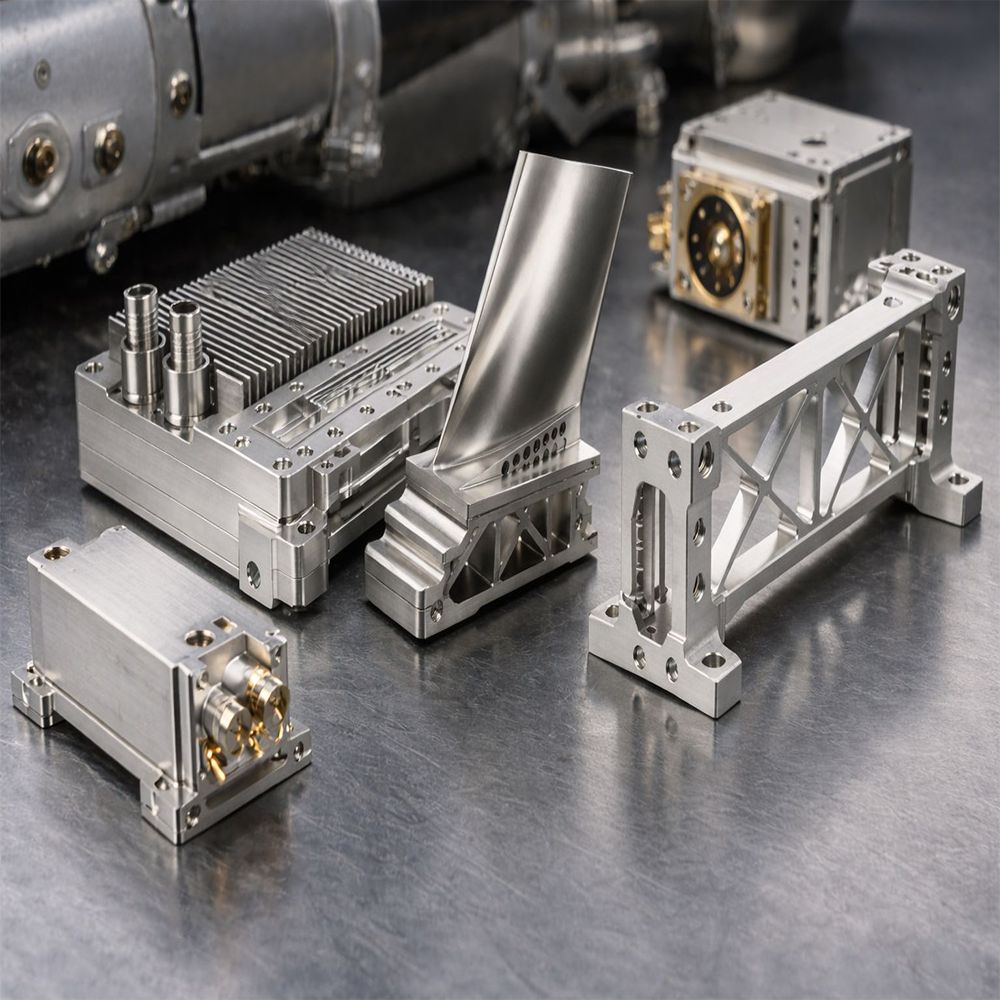
Tolerance cost is not linear
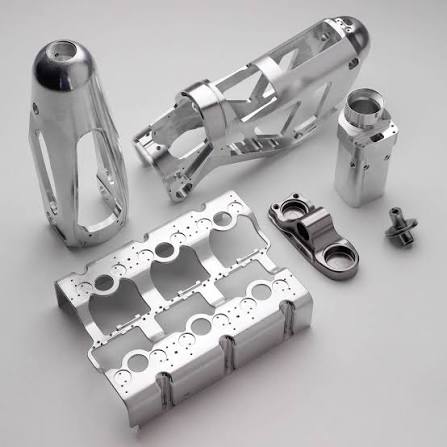
Loosening a tolerance from plus or minus 0.1 mm to plus or minus 0.02 mm on a single feature does not double the cost of that feature. It changes the process: a different machine, a climate-controlled room, a finishing pass, and an inspection step that consumes machine time. Each of those adds a floor cost. On a part with ten toleranced features, tightening all ten can triple the price while tightening the two that mate with something else adds 15 percent. Buyers should be able to name why each tight tolerance exists. If the answer is that it has always been that way, it is a candidate for relaxation.
Geometry that quietly doubles cycle time
Deep pockets with vertical walls need long, slender tools that must run slowly to avoid chatter. Sharp internal corners force a small tool and a finishing pass that a 3 mm corner radius would eliminate. Thin floors deflect and require light finishing cuts. Threads that stop close to a shoulder need a relieved tap or a thread mill. None of these features are unreasonable, but each adds minutes, and minutes at 60 to 90 dollars an hour add up fast. Adding a 2 mm corner radius to the internal pockets of a machined housing is the single most common cost reduction available to a designer, and it rarely affects function.
Inspection: the invisible line item
A first article inspection on a complex part can take longer than machining it. Full dimensional layout on a coordinate measuring machine, at perhaps 30 to 60 minutes per part, is a real cost that appears on the quote as a separate line or disappears into the piece price. For production runs, the inspection plan should shift from full layout to critical-feature sampling with a stated frequency. Suppliers who keep doing full layout on every part are either passing the cost along or working without a control plan, and neither is good news.
Quantity breaks and order structure
Quotes typically come in bands: 1 to 10, 11 to 50, 51 to 250, 251 to 1,000, and above. The price drop between the first two bands is usually steep and then flattens. Ordering 200 pieces to capture a 30 percent price break only makes sense if the design is stable. For parts still under revision, a 50-piece order at a higher unit price is cheaper than 200 pieces of a superseded drawing. A good manufacturer will say so, even though it reduces the order value.
What to send for an accurate quote
A three-dimensional model in STEP format, a drawing that states tolerances and datum structure, the material and temper, the surface finish, the annual quantity and the expected delivery pattern. Add a note about which features are functional and which are cosmetic. Shops that receive only a PDF drawing will quote conservatively to protect themselves, and the conservative number is the one you pay.
Lead time belongs in the same conversation. A quote at four weeks and a quote at ten days are not the same offer even when the piece price matches, and the gap is usually queue time rather than cutting time. Ask how many jobs sit ahead of yours on the specific machine that will run the part, and whether the shop holds a standing block of capacity for repeat customers.
References
Groover, M. P., Fundamentals of Modern Manufacturing: Materials, Processes, and Systems, 7th edition. Wiley, Hoboken, 2020, Chapters 21 to 23.
ASM Handbook, Volume 16: Machining. ASM International, Materials Park, Ohio, 1989.
Boothroyd, G., Dewhurst, P. and Knight, W. A., Product Design for Manufacture and Assembly, 3rd edition. CRC Press, Boca Raton, 2010, Chapter 4.
ISO 3685:1993, Tool-life testing with single-point turning tools. International Organization for Standardization, Geneva.
ISO 10303-21:2016, Industrial automation systems and integration, Product data representation and exchange, Part 21: Implementation methods: Clear text encoding of the exchange structure. ISO, Geneva.
ASME Y14.5-2018, Dimensioning and Tolerancing. American Society of Mechanical Engineers, New York.
